Arch. Endocrinol. Metab. 2024;68(special issue): e240094
Triiodothyronine (T3) increases the expression of the amphiregulin (AREG) oncogene by activating extranuclear pathways in MCF-7 breast cancer cells

DOI: 10.20945/2359-4292-2023-0094
ABSTRACT
Objective:
Considering that the αvβ3 integrin plays an important role in tumor metastasis, this study investigated the involvement of these pathways in mediating the triiodothyronine (T3) effects on amphiregulin (AREG) expression.
Materials and methods:
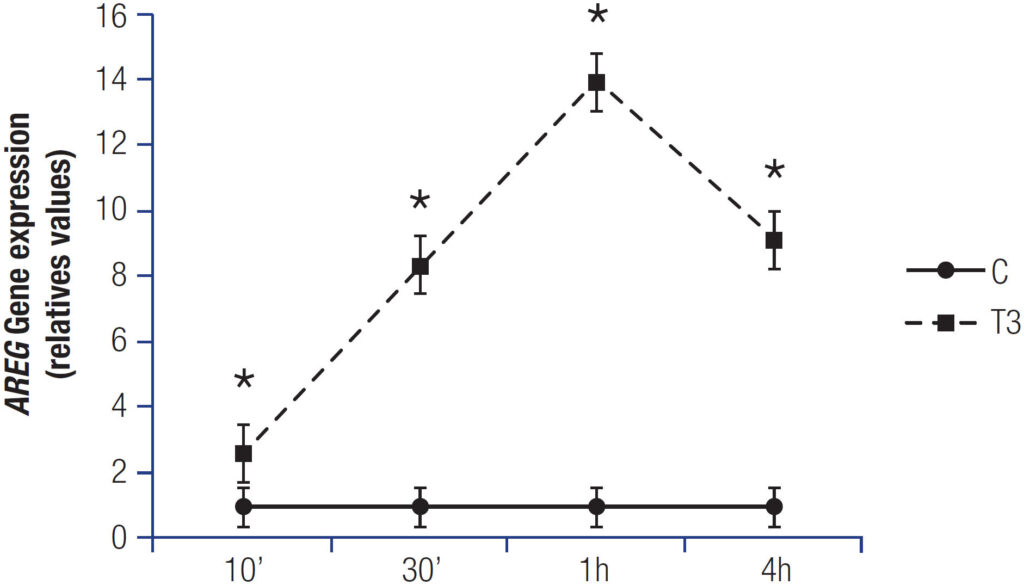
We treated MCF-7 cells with T3 (10 nM) for 1 hour in the presence or absence of inhibitors for αvβ3 integrin (RGD peptide), MAPK (PD98059), PI3K (LY294002), and protein synthesis (cycloheximide [CHX]). A control group (C) received no T3 or inhibitors. Analyses of mRNA and protein expression were done using RT-qPCR and Western blot, respectively.
Results:
We observed that T3 increased AREG expression, an effect that was suppressed by all inhibitors. This finding indicates that the activation of the αvβ3 integrin signaling pathway, via PI3K, MAPK/ERK, is necessary for the T3-mediated effects on AREG expression and highlights the involvement of nongenomic mechanisms. In addition, CHX completely abolished T3-induced AREG mRNA expression, indicating that this effect requires prior protein synthesis.
Conclusion:
The identification that T3 acts through this signaling pathway holds considerable potential for clinical application, as it could lead to the development of specific drugs to block it.
Keywords: AREG; breast adenocarcinoma; MCF-7 cells; Triiodothyronine; αvβ3 integrin