Arch. Endocrinol. Metab. 2025;69(5): e250103
Tertiary lymphoid structures in thyroid cancer

DOI: 10.20945/2359-4292-2025-0103
Abstract
Objective:
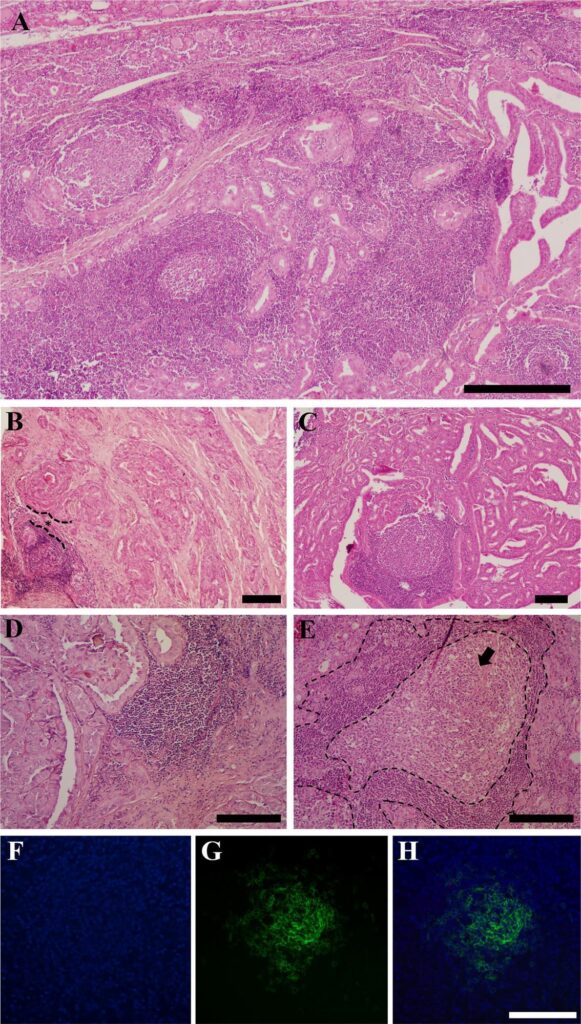
This study aimed to investigate the presence of tertiary lymphoid structures (TLSs) and tumor-infiltrating B cells within the germinal centers of TLSs in the tumor microenvironment of thyroid cancer, utilizing a morphological approach.
Materials and methods:
Histological samples from patients with papillary thyroid carcinoma (PTC) (n = 112) stained with hematoxylin and eosin were examined. The presence of lymphoid neogenesis in PTC was determined based on morphological features and classified according to TLS location and maturation status. Immunofluorescence staining was performed on selected cases to identify B cells within mature TLSs. Additionally, 499 scanned slides from the PTC cohort in The Cancer Genome Atlas – Thyroid Carcinoma (TCGA-THCA) dataset were accessed via cBioPortal to assess the presence of TLSs and compare the clinical and molecular characteristics of PTC cases with and without TLSs.
Results:
Tertiary lymphoid structures, resembling ectopic lymph nodes, were identified in 41% (46/112) of the histological PTC samples. Among these, 63% (29/46) were located in peritumoral regions, while 13% (6/46) were found within the intratumoral area. Mature TLSs containing germinal centers, in which B cells were detected, were observed in 15% (7/46) of cases. Immature TLSs were detected in 52% (24/46) of PTC cases with TLSs. Analysis of PTC scanned images from cBioPortal revealed TLSs in 8.4% of cases, of which 62% harbored the BRAFV600E mutation, along with upregulation of immune cell markers and SLC5A5 (NIS) expression.
Conclusion:
The identification of TLSs across multiple malignancies underscores their functional significance in modulating tumor-immune interactions with clinical implications. Therefore, the identification and morphological characterization of TLSs in PTC may provide valuable insights into their potential as immunobiomarkers in thyroid cancer.