Arch. Endocrinol. Metab. 2026;70(special issue 1): e250281
Vitamin D in the elderly: the phil-rouge in preventing bone, muscle and adipose deterioration?

DOI: 10.20945/2359-4292-2025-0281
ABSTRACT
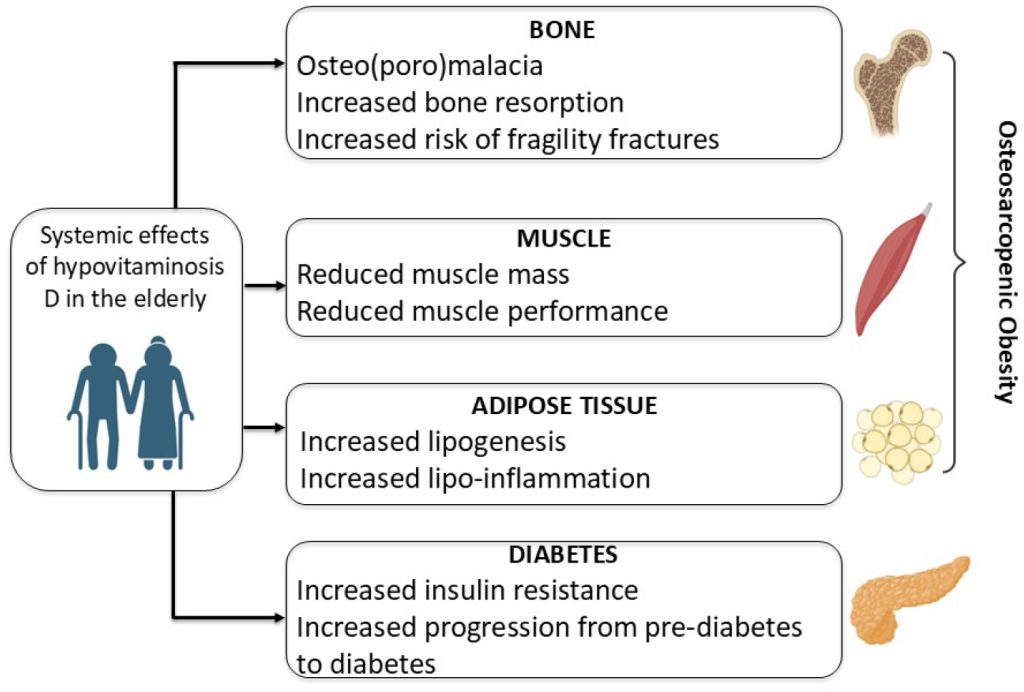
The pleiotropic role of vitamin D in human health has been implicated in modulating bone metabolism and other several extraskeletal areas, including muscle and adipose tissues regulation, and in influencing general and systemic outcomes. In the elderly, vitamin D deficiency is considered as an emerging public health issue affecting 40%-70% of older adults worldwide with higher rates occurring in institutionalized individuals or patients with multiple chronic comorbidities. The pathophysiology of vitamin D deficiency in the elderly is multifactorial and includes age-related reduced skin synthesis, limited sun exposure, declined renal and liver function, and long-term use of interfering medications. Given its pleiotropic effects, vitamin D deficiency in the elderly has been consistently associated with progressive bone deterioration and muscle and adipose dysfunctions, concurring to the occurrence of the osteosarcopenic obese phenotype. This multifaced deleterious scenario is strongly correlated with an increasing risk of fragility fractures, falls, functional and metabolic decline, all of which contribute to higher morbidity and mortality. Early diagnosis and screening with individualized criteria, targeted and personalized strategies for supplementation, and structured follow-up monitoring are required to reduce the clinically significant impact of vitamin D deficiency in this highly vulnerable population.
Keywords: COVID-19; Elderly; Osteoporosis; osteosarcopenic obesity; Vitamin D