Arch. Endocrinol. Metab. 2026;70(2): e260013
The decline of iodine therapy in the treatment of Graves’ disease in a hospital center: a 20-year analysis

DOI: 10.20945/2359-4292-2026-0013
ABSTRACT
Objective:
To evaluate and describe the changes in the therapeutic approach to Graves’ disease at a tertiary hospital center over a 20-year period, with an emphasis on the frequency of prescription and the timing of radioactive iodine indication.
Subjects and methods:
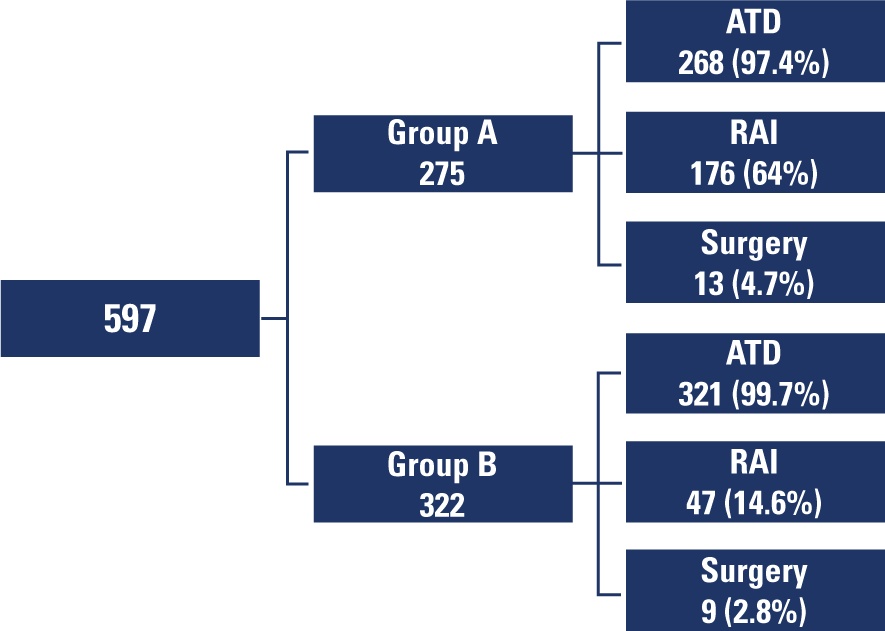
We conducted a retrospective analysis of data from medical records of patients recently diagnosed with Graves’ disease (GD) and followed up at a single institution during two consecutive periods: Group A diagnosed between 2002 and 2010, and Group B between 2011 and 2022. We analyzed the percentage of patients who underwent iodine therapy and were considered to have failed therapy if they did not achieve hypothyroidism or euthyroidism, comparing the results between both groups.
Results:
A total of 597 GD patients were included, of which 223 underwent radioactive iodine (RAI) therapy (37.35%). In Group A, 176 patients (64%) received RAI treatment, whereas, in Group B, only 47 patients were given this therapeutic indication (14.6%) (p < 0.001). The reduction in RAI prescriptions between both periods was independent of the therapeutic indication. Interestingly, RAI prescription due to relapse after clinical treatment was uncommon in both study groups. There was a significant increase in the duration of antithyroid drug (ATD) therapy before RAI prescription in Group B compared to Group A.
Conclusion:
Significant changes were observed in GD treatment, with a decline in the use of RAI as a first-line or salvage therapy. Nonetheless, radioiodine therapy remained an effective and safe treatment modality with successful cure rates.
Keywords: Graves' disease; Hyperthyroidism; radioiodine