Arch. Endocrinol. Metab. 2026;70(2): e260022
Extracellular vesicles related to familial hypercholesterolemia

DOI: 10.20945/2359-4292-2026-0022
Abstract
Objective:
This study aimed to evaluate extracellular vesicles (EVs) in a group of carriers of familial hypercholesterolemia (FH)-related genetic variants compared to those in family members without FH.
Subjects and methods:
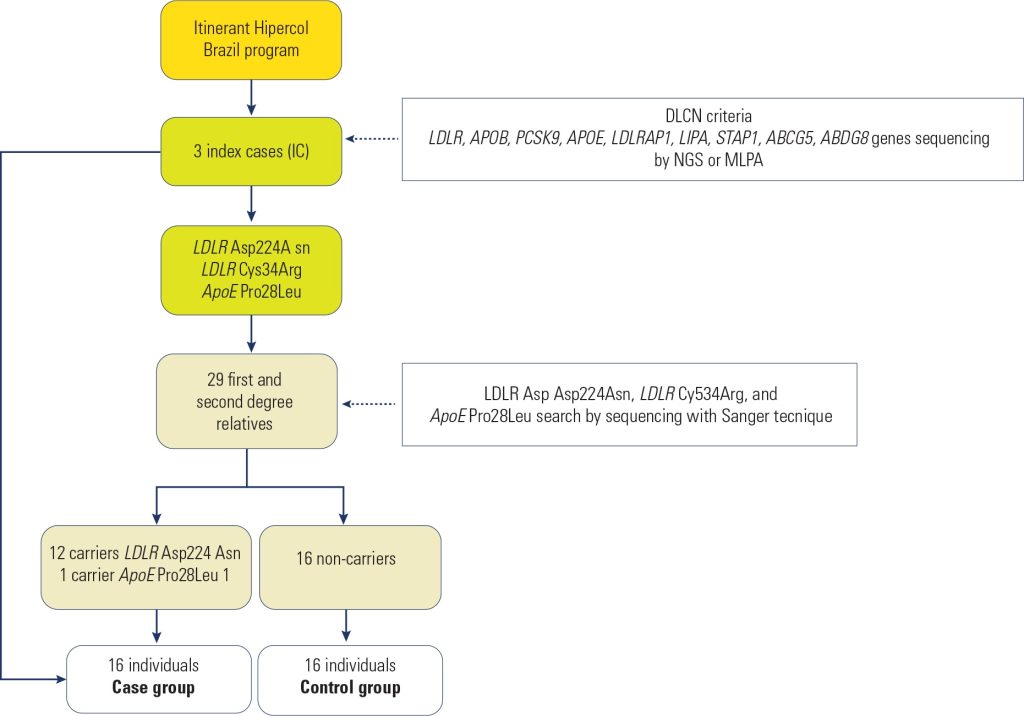
Annexin V-positive EVs (PS+-EVs), cardiomyocyte-derived EVs (CardioEVs), endothelial cell-derived EVs (EEVs), platelet-derived EVs (PEVs) and tissue factor-expressing EVs (TFEVs) were evaluated to compare individuals with FH and genetic variants (n = 16) and non-FH patients without genetic variants (n = 16).
Results:
Increased numbers of PS+-EVs, CardioEVs, EEVs and TFEVs were observed in the group c arrying genetic variants. Furthermore, patients with FH who did not use statins had higher counts of these same EVs than non-FH patients who did not use statins. These EVs were significantly correlated with low-density lipoprotein cholesterol (LDL-c) levels.
Conclusion:
The data suggest that EVs are related to FH and that their cellular origins could be related to cardiovascular complications commonly observed in this disease.