Arch. Endocrinol. Metab. 2024;68: e230183
Characteristics and clinical relevance of leukocytic response in children with diabetic ketoacidosis – A comparative cohort study

DOI: 10.20945/2359-4292-2023-0183
ABSTRACT
Objective
Leukocytosis is often observed among children presenting with diabetic ketoacidosis (DKA). This study compares detailed parameters of leukocytosis in children presenting with DKA versus infection.
Subjects and methods
In this comparative cohort study, we collected data from two groups of children, one hospitalized with DKA and another with community-acquired pneumonia (CAP). The primary objective was to compare the neutrophil-to-lymphocyte ratio (NLR) between the groups. Total leukocyte count (TLC), absolute neutrophil count (ANC), platelet-to-lymphocyte ratio (PLR), and platelet-to-monocyte ratio (PMR) were also compared. The correlation of these hematological parameters with the clinical outcomes in the DKA group was also explored.
Results
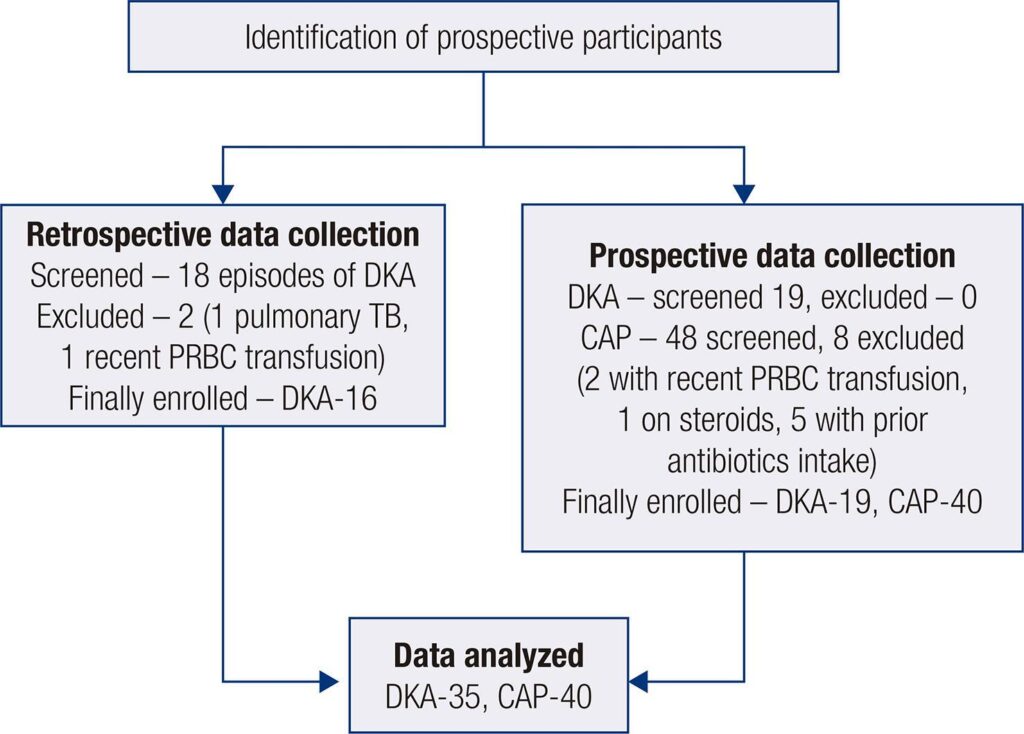
Data from 35 children with DKA (mean age 7.4 years, 12 boys) and 40 children with CAP (mean age 7.9 years, 15 boys) were available for comparison. No significant NLR difference was observed between the DKA and CAP groups. Similarly, no significant difference was observed in TLC and ANC between the groups. However, significant differences between the DKA and CAP groups were observed regarding mean (standard deviation) PLR (108.26 [67.51] versus 166.60 [163.83], respectively, p = 0.01) and mean PMR (1,795.40 [4,307.00] versus 886.33 [1,726.41], p = 0.01). Among children with DKA, ANC and PMR correlated positively and hemoglobin level correlated negatively with unfavorable outcomes.
Conclusions
Specific parameters of leukocytosis (PLR and PMR) differed significantly in children with DKA versus CAP. Some widely available and inexpensive hematological parameters of inflammation (hemoglobin, ANC, and PMR) may predict outcomes in patients with DKA.