Arch. Endocrinol. Metab. 2020;64(4):436-444
Correlations among vitamin K intake, body fat, lipid profile and glucose homeostasis in adults and the elderly

DOI: 10.20945/2359-3997000000230
ABSTRACT
Objective
Recent research has investigated the possible inverse relationship between vitamin K intake and body fat. In addition, an increasing number of studies are supporting a key role for this vitamin in improving lipid profile and insulin sensitivity and reducing the risk of type 2 diabetes mellitus, but little is known about what mechanisms would be involved. Thus, the objective of this study was to investigate the relationship between vitamin K intake (in the form of phylloquinone – PK), body fat, lipid profile and markers of glucose homeostasis in adults and the elderly.
Subjects and methods
A cross-sectional study with 298 participants (46% men) in the São Paulo Health Survey 2014-2015. Spearman correlations were performed to evaluate the associations between vitamin K intake and the biochemical and body composition measures.
Results
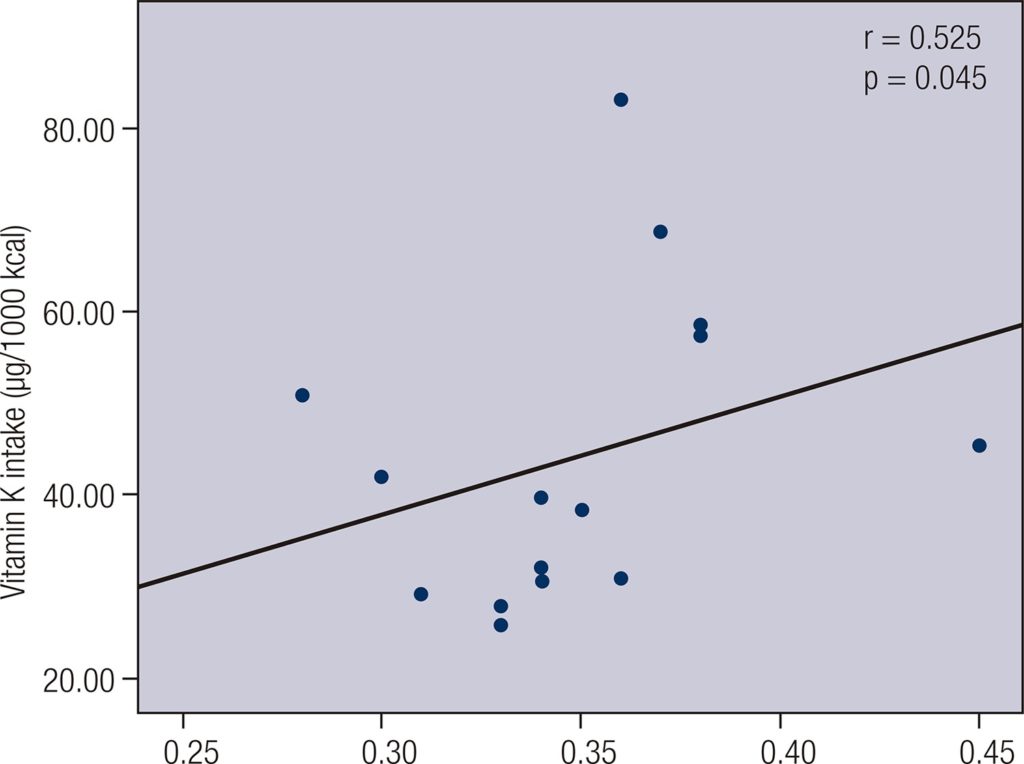
Among normal-weight male adults (n = 15), PK intake presented a positive correlation with the quantitative insulin sensitivity check index (QUICKI) (r = 0.525; p = 0.045). Among men with high fat mass index (FMI) (n = 101), PK intake had a negative correlation with homeostasis model assessment estimate for β-cell function (HOMA-β) (r = −0.227; p = 0.022). In women with high FMI (n = 122), PK intake had a negative correlation with HOMA-β (r = −0.199, p = 0.032) and insulin (r = −0.207, p = 0.026). No correlations were found between PK intake and lipid profile.
Conclusions
Our findings support a potential relationship among PK intake, body fat and markers of glucose homeostasis in adults and the elderly.
Keywords: body fat; glucose homeostasis; lipid profile; phylloquinone; Vitamin K intake