Arch. Endocrinol. Metab. 2025;69(6): e240435
Cyclic Cushing’s syndrome in ACTH-dependent hypercortisolism induced by the immune checkpoint inhibitor pembrolizumab

DOI: 10.20945/2359-4292-2024-0435
ABSTRACT
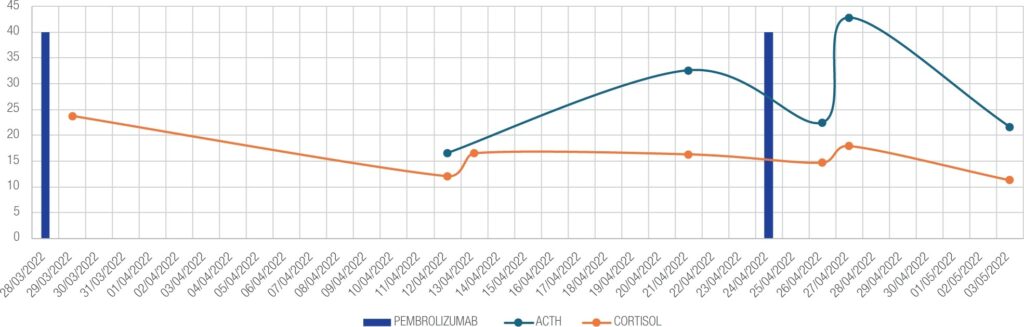
Immune checkpoint inhibitors have become transformative therapies, significantly enhancing survival outcomes for various neoplasms. However, they often trigger immune-related adverse events, including endocrinopathies. Cushing’s syndrome, characterized by exposure to elevated levels of circulating cortisol, presents a wide range of clinical features and is closely associated with increased morbidity and mortality. This article reports on a case of a patient under checkpoint inhibitor therapy, who developed cyclic adrenocorticotropic hormone-dependent hypercortisolism. The patient exhibited a Cushingoid phenotype, and testing revealed increased cortisol levels following the administration of 1 mg of dexamethasone, indicating endogenous hypercortisolism. Notably, the cortisol levels followed a cyclic pattern, decreasing as the next dose of pembrolizumab neared, thereby linking the hypercortisolism to fluctuations in the medication’s serum concentration. Given the significant morbidity linked to hypercortisolism, it is crucial for physicians prescribing immune checkpoint inhibitors to recognize the potential onset of endocrinopathies with unconventional presentations, such as cyclic hypercortisolism. Such conditions may present diagnostic and therapeutic challenges, ultimately impacting patient survival.