Arq Bras Endocrinol Metab 2014;58(1):42-47
Impact of metformin treatment and swimming exercise on visfatin levels in high-fat-induced obesity rats
DOI: 10.1590/0004-2730000002840
Objective
: Visfatin is a recently discovered adipocytokine that contributes to glucose and obesity-related conditions. Until now, its responses to the insulin-sensitizing agent metformin and to exercise are largely unknown. We aim to investigate the impact of metformin treatment and/or swimming exercise on serum visfatin and visfatin levels in subcutaneous adipose tissue (SAT), peri-renal adipose tissue (PAT) and skeletal muscle (SM) of high-fat-induced obesity rats.
Materials and methods
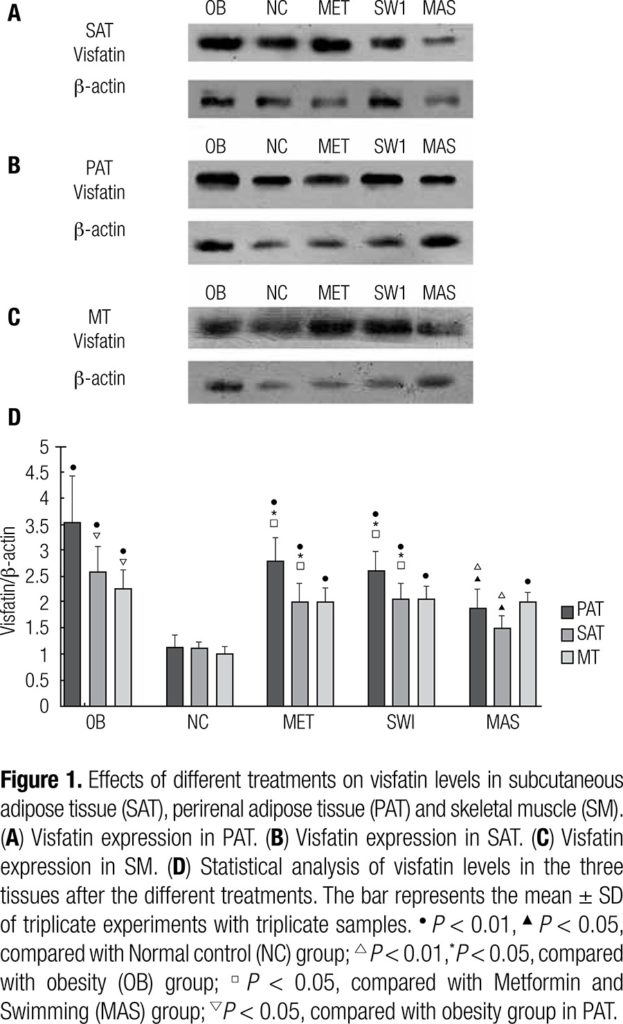
: Sprague-Dawley rats were fed a normal diet or a high-fat diet for 16 weeks to develop obesity model. The high-fat-induced obesity model rats were then randomized to metformin (MET), swimming exercise (SWI), or adjunctive therapy of metformin and swimming exercise (MAS), besides high-fat obesity control group and a normal control group, all with 10 rats per group. Zoometric and glycemic parameters, lipid profile, and serum visfatin levels were assessed at baseline and after 6 weeks of therapy. Visfatin levels in SAT, PAT and SM were determined by Western Blot.
Results
: Metformin and swimming exercise improved lipid profile, and increased insulin sensitivity and body weight reduction were observed. Both metformin and swimming exercise down-regulated visfatin levels in SAT and PAT, while the adjunctive therapy conferred greater benefits, but no changes of visfatin levels were observed in SM.
Conclusion
: Our results indicate that visfatin down-regulation in SAT and PAT may be one of the mechanisms by which metformin and swimming exercise inhibit obesity.
Keywords: adipocytokine; Endocrinology; metabolic syndrome