Arch. Endocrinol. Metab. 2025;69(3): e240441
Low irisin levels are associated with increased body weight and an adverse metabolic profile

DOI: 10.20945/2359-4292-2024-0441
Abstract
Objective:
To assess whether plasma irisin is associated with anthropometric, body composition, and metabolic parameters according to body mass index.
Methods:
A prospective cohort study was conducted at a tertiary referral hospital in Southern Brazil. Patients were divided according to body mass index: Group 1 (body mass index = 18.5 – 29.9 kg/m2; n = 15), Group 2 (body mass index = 30 – 39.9 kg/m2; n = 36), and Group 3 (body mass index ≥ 40 kg/m2; n = 30). Groups 1 and 2 underwent cholecystectomy, while Group 3 underwent Roux-en-Y gastric bypass. All groups were evaluated at baseline, and Groups 2 and 3 were re-evaluated 6 months later. Body composition was assessed using X-ray absorptiometry, and resting energy expenditure was measured by indirect calorimetry.
Results:
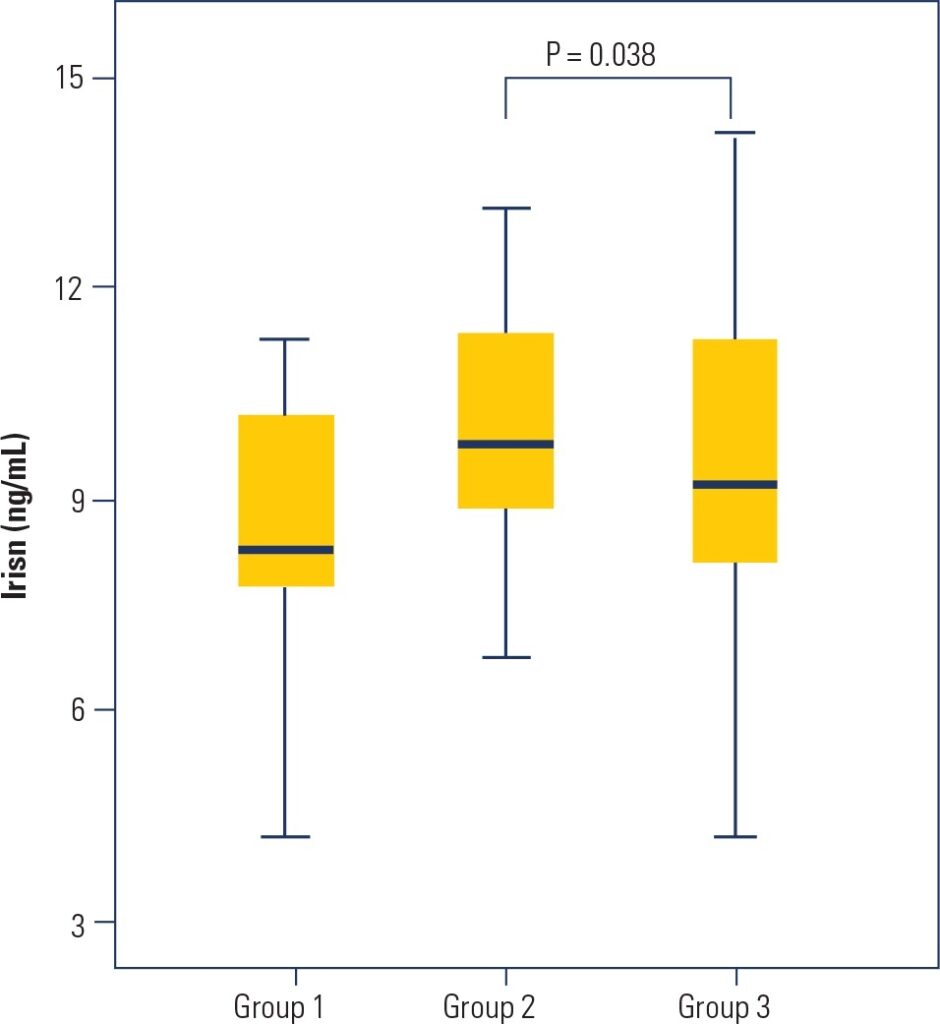
The study subjects were predominantly female (75%), white (82%), with a mean age of 46 ± 14 years. Group 3 had lower irisin levels compared to Group 2: 9.1 ± 2.2 versus 10.7 ± 2.8 ng/mL; p = 0.038). Irisin was negatively correlated with weight (r = -0.246; p = 0.042), waist circumference (r = -0.272; p = 0.024), glucose (r = -0.259; p = 0.039), glycated hemoglobin (r = -0.283; p = 0.024), triglycerides (r = -0.414; p = 0.024), and positively correlated with HDL (r = 0.280; p = 0.029).
Conclusion:
Irisin showed an inverse correlation with insulin-related metabolic pathways, suggesting its potential involvement in insulin resistance states such as obesity and type 2 diabetes.
Keywords: body mass index; diabetes mellitus; metabolic diseases; obesity; type 2