Arch Endocrinol Metab. 2025;69(2): e230348
Machine learning for high-risk hospitalization prediction in outpatient individuals with diabetes at a tertiary hospital

DOI: 10.20945/2359-4292-2024-0317
ABSTRACT
Objective:
To characterize, via a predictive model using real-world data, patients with diabetes with a heightened probability of hospitalization.
Methods:
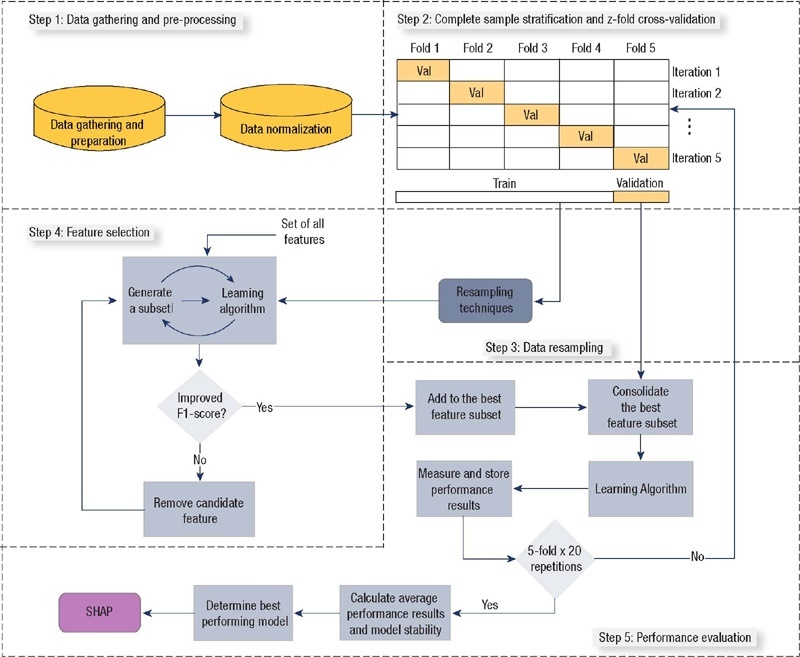
At the Endocrinology Unit of a tertiary public hospital in Rio Grande do Sul, Brazil, a retrospective cohort study analyzed initial consultations from January 1, 2015, to December 31, 2017, focusing on 617 patients with diabetes. Within this group, 82.98% (512 patients) did not require hospitalization, while 17.02% (105 patients) were hospitalized at least once. Multiple machine learning algorithms were tested, and the combination of XGBoost and Instance Hardness Threshold models displayed the best predictive performance. The SHapley Additive exPlanations method was used for result interpretation.
Results:
The most optimal performance was observed by combining the XGBoost and Instance Hardness Threshold models, resulting in the highest sensitivity (0.93) in accurately classifying hospitalization events, with an acceptable area under the curve of 0.72. Key predictive features included the number of outpatient visits, amplitude of estimated glomerular filtration rate, and age (individuals below 24 years old and between 65 to 70 years old had higher hospitalization likelihood).
Conclusion:
The proposed model demonstrated high predictive capability and may help to identify patients with diabetes who should be more closely monitored to reduce their risk of hospitalization.
Keywords: diabetes mellitus; hospitalization; Machine learning