Arch. Endocrinol. Metab. 2024;68: e230381
Modified-release gliclazide acutely improves recovery but causes undesirable blood glucose decrease after a resistance exercise session in healthy adults: a pilot study for a randomized clinical trial

DOI: 10.20945/2359-4292-2023-0381
ABSTRACT
Objective
Sulfonylureas have been used to improve performance in strength sports. However, this hypothetical effect has not been proven. We examined the ergogenic acute effect of gliclazide on resistance training performance and muscle recovery.
Subjects and methods
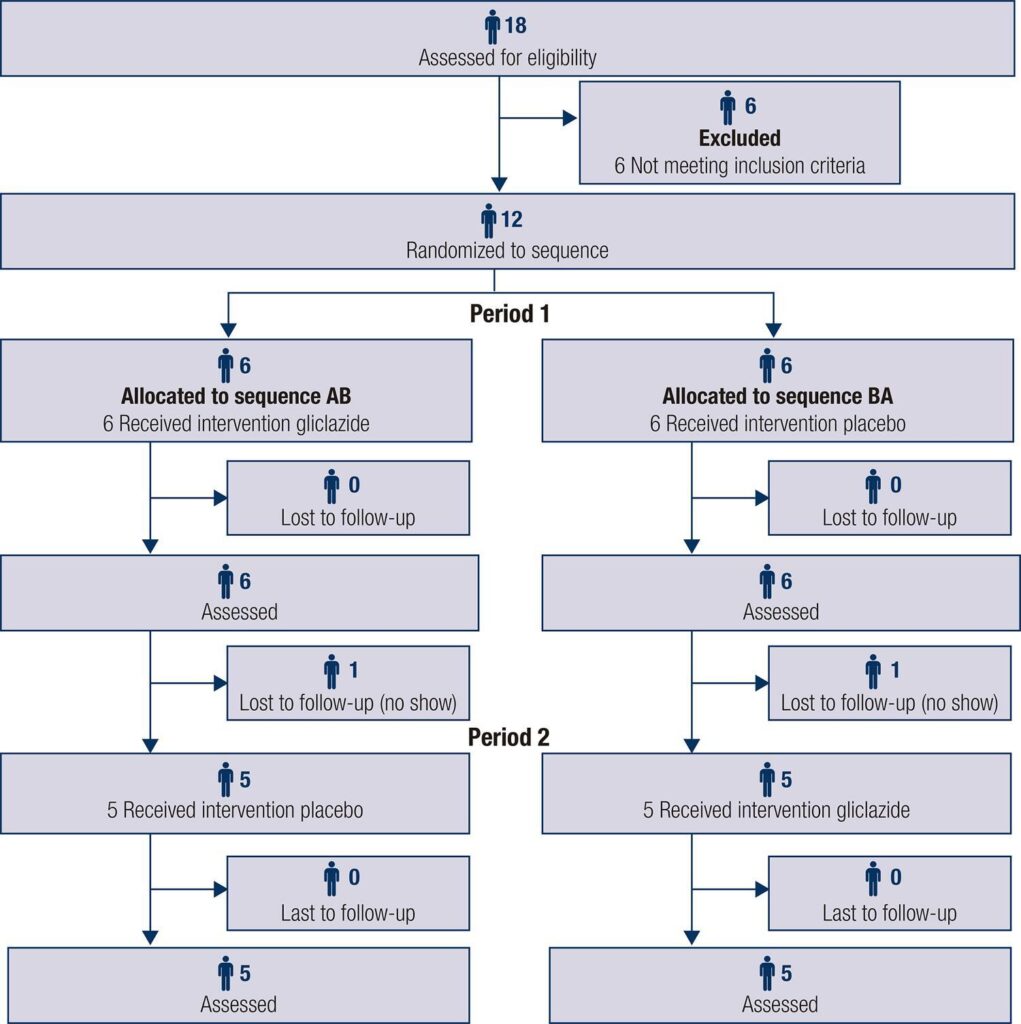
We conducted a double-blind, randomized, crossover pilot study with 10 healthy resistance-trained adults (29.3 ± 4.4 years), nonusers of anabolic steroids. The participants were randomized to two exercise sessions. In the first session, five participants received placebo and the other five received gliclazide modified release, both administered 8 hours before the session. Session two was performed in a crossover fashion a week later. The volume load was calculated as the maximum number of repetitions of four sets multiplied by load (65% 1-RM). Blood samples were collected before and after exercise, as well as 24 hours and 48 hours after exercise for measurement of creatine kinase (CK-MM) and lactate dehydrogenase (LDH) activity. Blood glucose was measured with a glucometer before, during, and after the exercise sessions.
Results
Gliclazide did not enhance volume load for bench press (placebo: 2,698.0 ± 923.0 kg; gliclazide: 2,675.0 ± 1,088.0 kg; p = 0.073) or leg press (placebo: 10,866.0 ± 2,671.0 kg; gliclazide: 10,817.0 ± 2,888.0 kg; p = 0.135). However, CK-MM (-27.7%; p = 0.034) and LDH (-21.1%; p = 0.021) activities were decreased with gliclazide 48 hours after exercise. There was also a decrease in blood glucose in the gliclazide compared with the placebo session (p = 0.018).
Conclusion
Gliclazide did not enhance performance in a single resistance training session, but promoted faster muscle recovery. The decrease in blood glucose post-exercise with gliclazide was an undesirable effect that could lead to long-term glucose metabolism disorders. Registered in ClinicalTrials.gov under number NCT04443777.