Arch. Endocrinol. Metab. 2025;69(6): e250228
Molecular investigation of primary aldosteronism: exploring genetic heterogeneity in understudied populations

DOI: 10.20945/2359-4292-2025-0228
ABSTRACT
Objective:
Genetic abnormalities in ion channels that regulate the depolarization of adrenal glomerular cell plasma membranes have been identified as a cause of primary aldosteronism (PA) due to aldosterone-producing adenoma (APA). This study aimed to evaluate somatic variants in the KCNJ5, CACNA1D, CLCN2, ATP1A1, ATP2B3, GNAQ, GNA11, and CTNNB1 genes, assess the genotype-phenotype correlation, and analyze the outcomes in patients with APA from a heterogenic ethnic population.
Subjects and methods:
Clinical, biochemical, and molecular data were obtained from 32 patients.
Results:
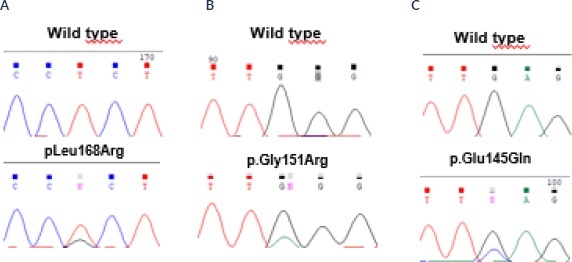
Pathogenic variants (PVs) were identified in 43.7% (14/32) of the patients. PVs occurred in 31.2% (10/32) of the KCNJ5 gene: p.Leu168Arg (15.6%), p.Gly151Arg (9.3%), p.Glu145Gln (3.2%), and p.Gly151_Tyr152del (3.2%). In the CLCN2 gene, two PVs (6.25%), p.Pro48Arg and p.Ala195Thr, were identified; the latter was found in association with p.Glu145Gln in the KCNJ5 gene within the same APA. Additionally, two PVs were found in ATPase genes: p.Leu104Arg in ATP1A1 (3.2%) and p.Leu425_Val426del in ATP2B3 (3.2%). No PVs were identified in the other examined genes. Patients with KCNJ5 PVs were predominantly female (90% vs. 45.5%; p = 0.01), had an earlier age of PA diagnosis (38 vs. 54 years; p = 0.04), and exhibited fewer electrocardiogram abnormalities (20% vs. 59%; p = 0.04). Patients with PVs across all studied genes also showed an earlier age at PA diagnosis (p = 0.02). The Primary Aldosteronism Surgical Outcome score revealed that 37.5% of patients met clinical/biochemical cure criteria, 12.5% showed partial improvement in both, while 50% achieved complete biochemical but not clinical remission. Patients carrying PVs had a higher rate of complete clinical and biochemical cure (66.7% vs. 33.3%; p = 0.05).
Conclusion:
Identifying PVs in this study enhances our understanding of the genetic landscape in Brazilian patients with primary aldosteronism.