Arch. Endocrinol. Metab. 2025;69(4): e240377
Overexpression of PON1 reduces high glucose induced renal tubular epithelial cell injury by activating PPARγ signaling pathway to alleviate diabetes nephropathy

DOI: 10.20945/2359-4292-2024-0377
Abstract
Objective:
To investigate the role of PON1 in diabetic nephropathy and elucidate the underlying mechanisms using a cellular model.
Materials and methods:
A diabetic nephropathy model was established using high glucose-induced HK-2 cells. Potential target genes and signaling pathways were identified through bioinformatics databases, and PON1 expression was manipulated to interfere with these pathways. The effects of different treatments on cell conditions were systematically evaluated.
Results:
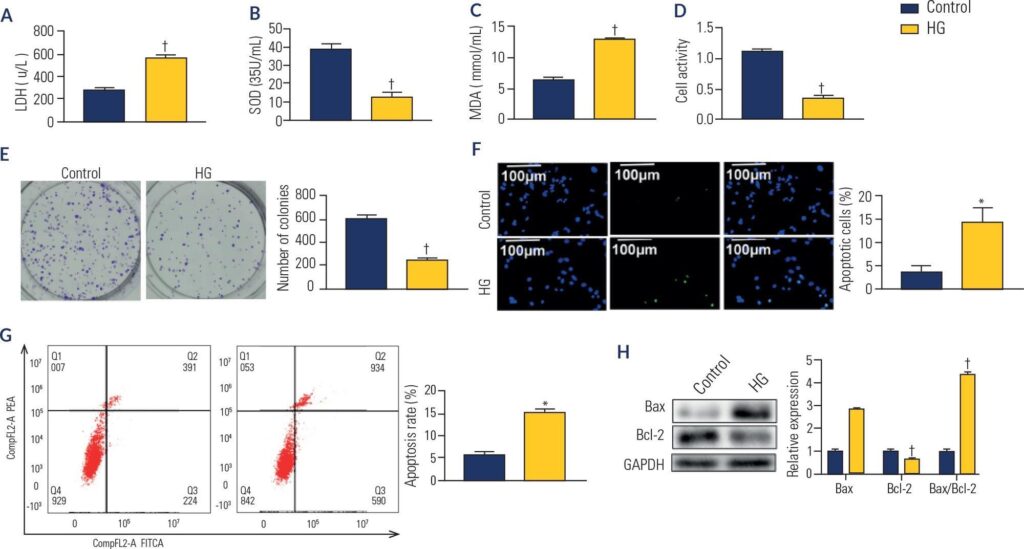
PON1, the targeted gene in diabetic nephropathy, was significantly downregulated in high glucose-induced cells. The PPARγ signaling pathway was identified as closely associated with PON1, with both PPARα and PPARγ emerging as key regulators within this pathway. We observed significant increases in lactate dehydrogenase activity, malondialdehyde levels, and cell apoptosis, along with notable decreases in superoxide dismutase levels, cell viability, and cell proliferation, in the high glucose-treated group. Additionally, the expression levels of PPARα and PPARγ were also decreased. Overexpression of PON1 (pc-PON1) in the high glucose group mitigated these effects, whereas treatment with the PPARγ antagonist GW9662 reversed the protective changes induced by pc-PON1.
Conclusion:
Elevated PON1 levels mitigated oxidative stress and inhibited cell death, thereby promoting cell growth and alleviating diabetic nephropathy through activation of the PPARγ signaling pathway.