Arch. Endocrinol. Metab. 2025;69(6): e240428
Rapid and dose-dependent increase of 25(OH)D levels after calcifediol supplementation in a woman with obesity, chronic liver disease, and osteoporosis

DOI: 10.20945/2359-4292-2024-0428
Abstract
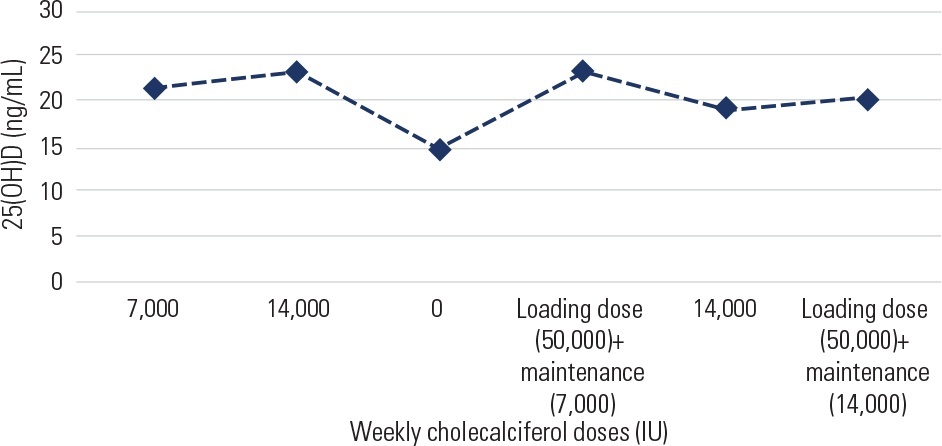
VitaminD deficiency is a global concern, and calcifediol serves as an alternative to cholecalciferol for achieving and maintaining optimal vitamin D levels, despite the lack of international guidelines for calcifediol supplementation regimens. We present a case involving a 58-year-old patient with osteoporosis and a medical history of type 2 diabetes, obesity, and cirrhosis. Standard treatment with calcium, cholecalciferol, and bisphosphonate was initiated; however, supplementation failed to achieve the target vitamin D levels during follow-up. Subsequently, calcifediol was introduced at a dose of 10 mcg daily, which was increased to 20 mcg daily after one month. Nonetheless, the vitamin D serum concentration rose to 80 ng/mL by the third month, prompting discontinuation of the drug and levels gradually decreased to 28 ng/mL over 2.5 months. Upon the administration of calcifediol at 10 mcg three times a week, serum levels stabilized at 35 ng/mL. Calcifediol offers several advantages over cholecalciferol, including better intestinal absorption, bypassing the need for hepatic hydroxylation, and a more rapid increase in 25-hydroxyvitamin D (25[OH]D) levels. Current guidelines recommend considering calcifediol in cases of obesity, malabsorption syndromes, and chronic hepatic diseases, although optimal dosages remain uncertain. Based on the commercially available tablet in Brazil, we suggest initiating calcifediol at 10 mcg per day and adjusting the dose according to 25(OH)D levels.
Keywords: Calcifediol; cholecalciferol; dosage; Vitamin D deficiency