Arch. Endocrinol. Metab. 2017;61(3):233-237
Serum Fluorescent Advanced Glycation End (F-AGE) products in gestational diabetes patients
DOI: 10.1590/2359-3997000000238
ABSTRACT
Objectives
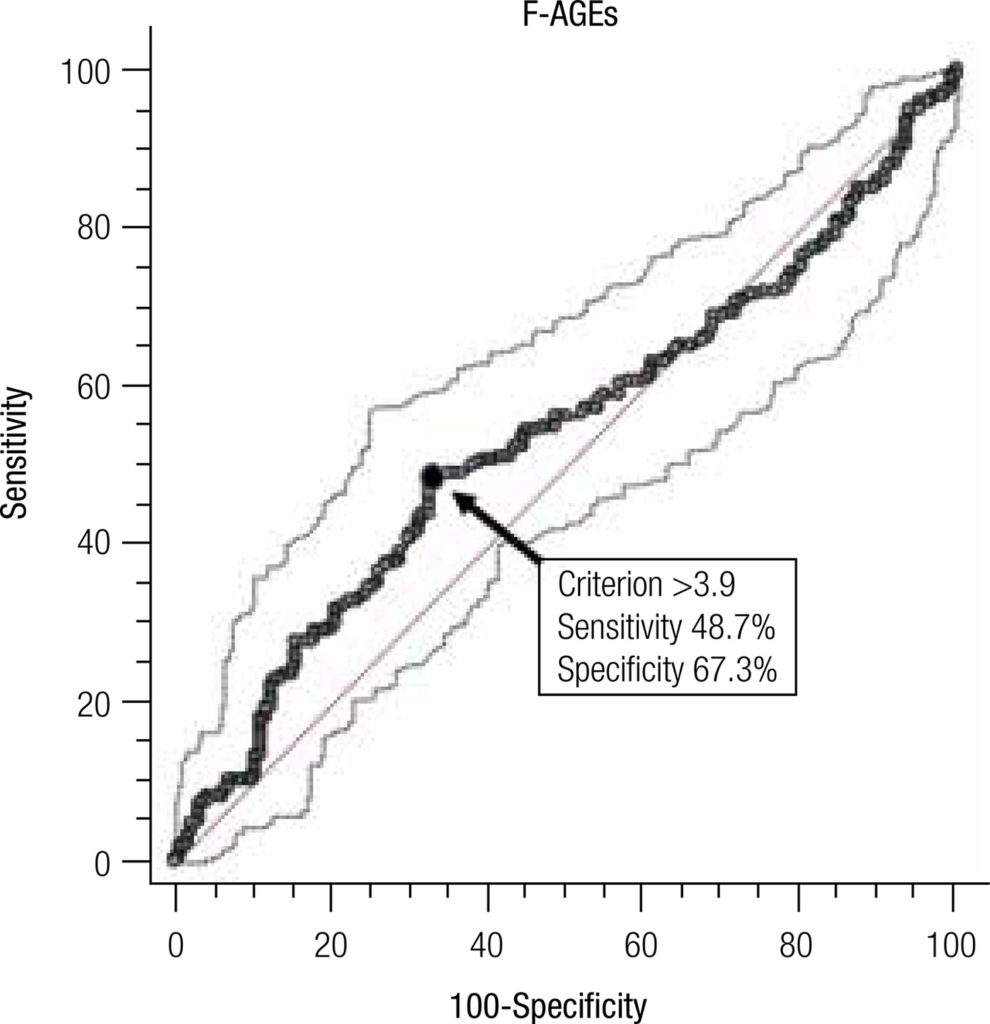
Advanced glycation end products (AGEs) are involved in the pathogenesis and complications of diabetes mellitus (DM). Gestational DM (GDM) is characterized by increased glycemia and oxidative stress, which are factors associated with high serum AGE concentrations. The aim of this study was to evaluate the utility of a serum fluorescence AGE (F-AGE) method as a screening tool for gestational diabetes.
Subjects and methods
Serum samples from 225 GDM patients and 217 healthy pregnant women (healthy controls) were diluted 50-fold in phosphate-buffered saline, and the AGEs were estimated by fluorometric analysis (λEx 350 nm/ λEm 440 nm).
Results
No significant (P > 0.05) differences in AGE concentrations, expressed in Arbitrary Units (UA/mL × 104), were observed in the women with GDM or in the healthy controls. Furthermore, F-AGE concentrations did not change significantly during the pregnancy (12-32 weeks of gestation). Only the GDM group had a positive correlation (r = 0.421; P < 0.001) between F-AGEs and serum creatinine concentrations.
Conclusion
It was not possible to distinguish women with gestational diabetes from the healthy controls on the basis of serum F-AGE concentrations.