Arch. Endocrinol. Metab. 2025;69(4): e250074
Study of the early metabolic characteristics in patients undergoing sleeve gastrectomy for the treatment of obesity and type 2 diabetes mellitus (T2DM) using high-performance liquid chromatography combined with high-resolution mass spectrometry via metabolomics technology

DOI: 10.20945/2359-4292-2025-0074
Abstract
Objective:
To investigate the impact of laparoscopic sleeve gastrectomy (SG) on plasma metabolites in obese patients with type 2 diabetes mellitus (T2DM) and identify key metabolites associated with weight loss. Subjects and
methods:
Nineteen obese T2DM patients who underwent SG surgery were selected as the study participants. Preoperative and postoperative plasma samples and clinical data were collected. High-performance liquid chromatography-mass spectrometry (LC-MS/MS) was used to detect plasma metabolites, and changes in the levels of metabolites before and after surgery were analysed and compared.
Results:
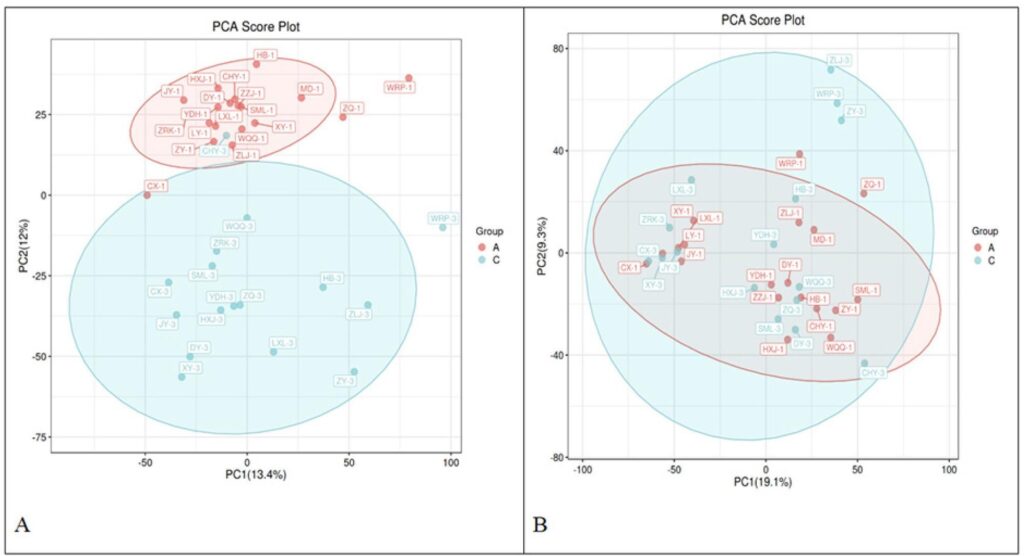
After the surgery, metabolic indicators such as body weight, BMI, fasting blood glucose, and glycated haemoglobin significantly decreased. Metabolomic analysis revealed 85 metabolites with differential abundance, among which the levels of 50 metabolites (such as homocysteine and oleic acid) significantly increased after the surgery, and the levels of 35 metabolites (such as corticosterone and glutamic acid) significantly decreased. The changes in the abundance of these metabolites were closely related to surgical weight loss and improvements in glycolipid metabolism.
Conclusion:
Laparoscopic sleeve gastrectomy effectively improves glycolipid metabolism in obese patients with T2DM by affecting the levels of specific metabolites. Metabolites such as homocysteine and chenodeoxycholic acid can serve as potential markers for assessing surgical efficacy. This study provides an important basis for developing a deeper understanding of the metabolic mechanisms of SG surgery and can aid clinicians in evaluating surgical outcomes and the prognosis of this surgery in patients.