Arch. Endocrinol. Metab. 2024;68: e230234
Use of liraglutide after bariatric surgery: a 36-month follow-up in a real-world setting in Chile

DOI: 10.20945/2359-4292-2023-0234
ABSTRACT
Objective:
Bariatric surgery has several benefits, including sustainable weight loss and improvement or resolution of metabolic comorbidities. However, despite initially successful weight loss, weight regain occurs during long-term follow-up, and many patients are unable to reach or maintain their target weight goals. Liraglutide is a therapy for obesity aimed at preventing weight regain.
Materials and methods:
This retrospective, observational, single-arm, pre-post study was performed to analyze the relative change in body weight among patients receiving liraglutide after bariatric surgery in a real-world setting in Chile.
Results:
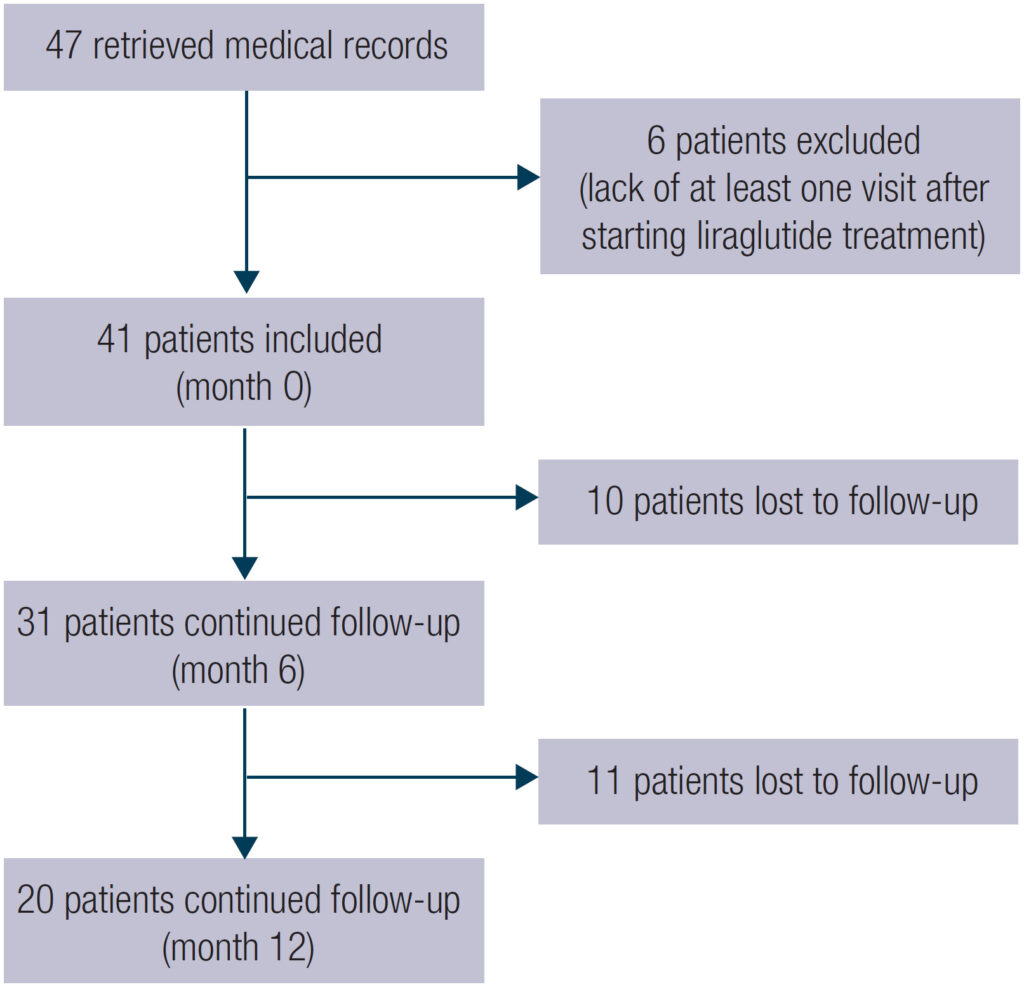
Treatment with liraglutide at a median dose of 1.2 mg was associated with a mean weight loss from baseline to 3, 6, 12, 24, and 36 months of 5%, 7.7%, 7.6%, 5.8%, and 5.1%, respectively. The mean body mass index reduction was 14.8% at 36 months. Dropout rates were consistent with those of usual obesity treatments. Overall, 70% of the patients were receiving other weight-loss drugs. Liraglutide was well tolerated, but cost barriers led to several patients interrupting its use.
Conclusion:
Liraglutide is an effective and safe treatment for weight reduction after bariatric surgery in patients receiving routine clinical care in Chile.
Keywords: Bariatric surgery; Chile; liraglutide; obesity